July 21, 2026
Electricity keeps our daily work running smoothly, but it also brings a few hidden dangers to the everyday office or job site. Understanding these risks is essential for maintaining a secure environment where every team member can focus entirely on their tasks without worry. Staying safe means knowing exactly what to look out for during your shift. Identifying the five biggest electrical risks that could pop up in your workspace helps prevent accidents before they happen.
1. Dealing with Damaged Power Cords
Frayed wires and cracked plastic casings on extension cords are incredibly common sights in busy offices. People step on them, roll heavy desk chairs over them, and pull them roughly out of walls every single day. Over time, this normal wear and tear creates a major safety risk for everyone walking by. A licensed commercial electrician can inspect these setups to keep your team safe from accidental shocks during the week.
According to the U.S. Bureau of Labor Statistics, most electricians undergo four-to five-year apprenticeships, giving them around 2,000 hours of hands-on training each year before obtaining their full professional license. This depth of preparation highlights why regular people should leave complex wiring assessments to qualified individuals. When a cord becomes brittle or starts showing bare copper wire, it is time to discard it immediately rather than hiding it under a rug.
Tucking a bad cord under furniture or carpeting only makes things worse because heat builds up rapidly in confined spaces. The trapped thermal energy can easily spark a fire before anyone even notices a problem. Keeping walkways clear and checking your equipment regularly keeps the office running without any sudden, scary surprises. Always replace compromised power cables right away to maintain a perfectly secure and productive environment for your coworkers.
2. Working Around Wet Work Areas
Water and electricity are famous for being a terrible combination, yet they end up close together surprisingly often. Think about break room sinks, water coolers, or damp basements where appliances stay plugged in constantly. If moisture sneaks into an electrical connection, it creates an immediate path for dangerous current to travel directly to your hands. This is why specialized safety outlets are absolutely mandatory in these high-risk zones.
Ground Fault Circuit Interrupters are the clever little outlets with test buttons that shut off power instantly during a leak. An experienced commercial electrician knows exactly where these safety devices must go to meet modern local safety building codes. Having them installed near every single water source prevents severe shocks if an appliance happens to fall into a puddle or get splashed. Regularly pressing the test button on these outlets confirms they remain fully functional and ready to protect your staff.
Spilling a large morning cup of coffee over a desktop computer or power strip can also trigger an emergency. Clean up liquid messes instantly and unplug any wet devices carefully before attempting to dry them off completely. Keeping drinks far away from sensitive electronic gear is a simple habit that protects your hardware and your physical safety. Encouraging the team to use spill-proof travel mugs at their desks is a great way to minimize these daily accidents. A dry workspace is always a safe workspace for your entire crew.
3. Overloading Existing Electrical Outlets
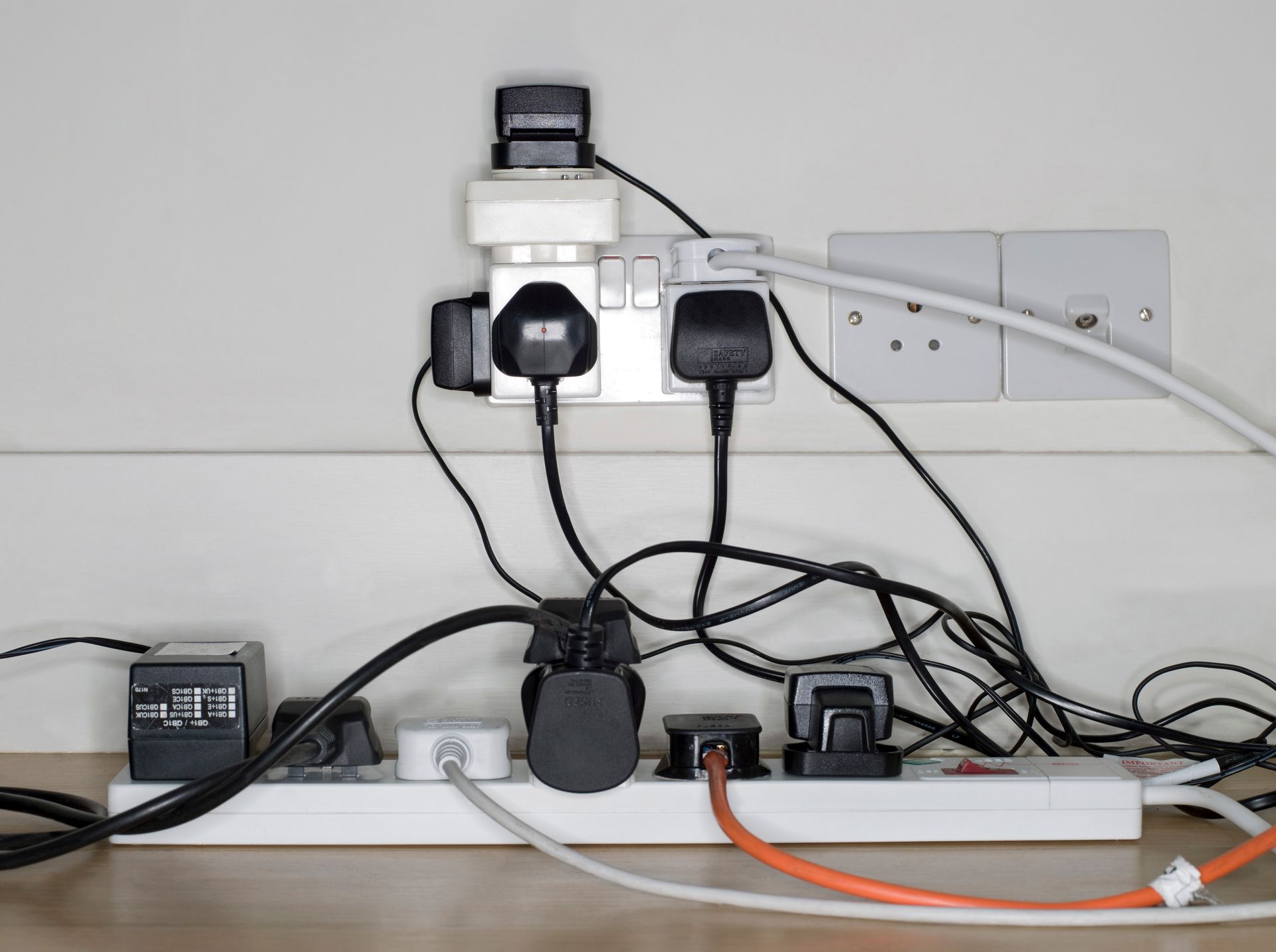
We all love our modern gadgets, but plugging too many electronic devices into a single wall plug creates some serious trouble. Space heaters, mini fridges, microwave ovens, and multi-plug adapters quickly demand more current than the internal system can safely handle. When the system gets overwhelmed, wires inside the walls begin to bake from the intense heat. This hidden hazard can slowly smolder behind drywall without anyone realizing it.
Circuit breakers usually trip to protect the building, but older breaker panels might fail to cut the power in time. If you notice outlets feeling warm to the touch or smelling like burning plastic, you need to reduce the load immediately. A professional commercial electrician can run dedicated circuits for heavy machinery or large break room appliances, so your breakers stop flipping constantly. Splitting up the power demand keeps everything running smoothly.
Piggybacking multiple power strips together is another common mistake that people make when short on outlets. This practice strains the electrical infrastructure and creates a messy web of trip hazards across the floorboards. Instead of relying on temporary fixes, rearranging desks closer to available outlets helps distribute the load more evenly. Smart power management protects your valuable electronics and prevents dangerous circuit overloads throughout the busy workday.
4. Touching Exposed Electrical Elements
Open junction boxes, missing outlet covers, and exposed wiring pieces pose extreme risks in any modern professional setting. These situations often happen during building renovations or when protective coverings get cracked and never receive replacements. Leaving live components uncovered means anyone who's walking by could accidentally brush against a hot wire while reaching for a light switch. It only takes a split-second of contact to cause a major medical emergency here.
Unfamiliar wires hanging from a ceiling or wall should always be treated as completely live and highly hazardous. Never attempt to move them out of the way with your bare hands or random office tools. Instead, mark the area with warning signs to keep other employees at a safe distance until help arrives. This simple precaution prevents a terrible accident from happening to an unsuspecting coworker or weekend visitor.
Restoring these protective barriers requires special tools and deep knowledge of building layouts to prevent future problems. An expert commercial electrician will systematically track down open connections, seal them up tightly, and put durable covers back in place. Keeping these dangerous elements fully enclosed avoids accidental contact and keeps your regular operations going along without scary disruptions. Protective covers are your first line of defense against unexpected shocks.
5. Neglecting Outdated Wiring Systems
Older commercial structures often rely on electrical systems that were designed decades ago for much lighter utility loads. Modern offices use massive server racks, advanced computer networks, and high-tech equipment that these ancient systems simply cannot handle. Over time, old insulation becomes brittle and flakes off inside the conduits, leaving bare wires dangerously vulnerable. This invisible aging process creates a significant fire hazard that grows with each passing business year.
Flickering lights, buzzing sounds behind walls, and mysterious power drops are classic warning signs of a failing infrastructure. Ignoring these red flags can lead to costly equipment damage or severe safety threats for everyone inside. Booking a reliable commercial electrician to perform a comprehensive system audit helps identify these hidden vulnerabilities before they escalate into major disasters. Upgrading old panels safely brings your building into the modern age.
Modernized systems handle large electrical loads easily while using much less energy overall, saving money on utility bills. Investing in infrastructure updates provides long-term stability and great peace of mind for the entire business operation. Contacting a skilled commercial electrician allows your company to modernize its power grid without facing unexpected downtime. Staying ahead of these hidden hazards keeps your team safe and your production moving forward every day.
Recognizing these common electrical hazards is the first step toward creating a truly secure workplace environment today. By staying alert and addressing issues quickly, you protect your team and keep business operations running smoothly. Keep your eyes open, report problems immediately, and let professional hands handle the power systems safely. Take a proactive approach to property maintenance with AccuTex Electric, LLC, to prevent minor technical glitches from turning into serious operational liabilities.